Monday, November 23, 2009

Historical Artistic Styles

Abstract Art
Abstract art indicates a departure from reality in depiction of imagery in art. It is based on geometric shapes, bold primary colors and optical prints. Yves Saint Laurent used Dutch artist Piet Mondrian’s abstract grid paintings to create a series of simple shift dresses that have become icons of 1960s style. They were immediately copied in man-made fabrics such as Bri-nylon. Please see both dresses below.


Surrealism
The appeal of Surrealism to the fashion industry was in the use of ordinary everyday objects and landscapes that transferred easily to fabric printing, jewelry, and hats. When I think of surrealism, the Parisian fashion designer Elsa Schiaparelli immediately pops into my head. She collaborated with many surrealist artists including Salvador Dali, Jean Cocteau, and Alberto Giacometti. She was the first to use shoulder pads, hot pink, and was most known for her surrealist designs in the 1930’s. The best were her hats that resembled a giant shoe, a lamb chop, and both were worn by Daisy Fellowes. Please see her shoe hat below.

Pop Art
Pop Art is an art movement of the 20th Century which is characterized by themes and techniques drawn from popular mass culture. A good example of pop art is Andy Warhol. Diane von Furstenberg designed a resort-collection inspired by Andy Worhol for her 2008 collection. The pieces, that include bikinis, caftans, and one-piece suits, all have Warhols iconic prints on them. These images are glamorous and perfect for the beach. Interestingly enough during the Studio 54 times, Diane actually posed for Andy’s portraits.


Romanticism
Romantic fashion introduced unnatural waistlines at the rib cage and reintroduced the ballooning, Gothic like “leg of mutton” sleeves. This style is feminine and fitted to the silhouette. Alexander McQueen’s collections are known for both the emotional power and raw energy of his shows, as well as his modern romantic nature of his clothes. McQueen has a very emotional and passionate viewpoint and is very influence by the arts. Please see below examples of the balloon skirt and excellent tailoring.


Byzantine Era
The Byzantine era was a strong influence to Nicole Miller’s Fall in 2006. Through her prints, it was clear that she had travelled back in time to the Byzantine era for inspiration. Byzantine art is known for its pixilated quality of the mosaics created to ornate churches and palaces. These fragmented surfaces were very evident in Miller’s prints. The prints were paired with shades of olives, wine, teal, brown and green. She also included Byzantine influence necklaces and cuffs, distressed double-buckle leather belts, and leather gloves.

Renaissance
John Galliano’s Dior based his Couture Spring 2009 collection on the work of Flemish painters. Flemish art reached its peak in the 17th Century and the paintings included religious scene and portraits. The dresses had a late Gothic, early Renaissance influence by the color contrast and palette of the dresses. The Dior collection is remarkable by its use of lines to enhance each and every element. You can see similarities from the Couture collection to the textures and lines of the works of Jan van Eyck, Hans Memling, and Hugo van der Goes.

Monday, November 2, 2009

Genealogy of the Handbag

Handbags have played an essential part in fashion history ever since people have had something precious to carry around with them. The very first mention in written literature about handbags comes from the 14th century, even though Egyptian heieroglyphics show pouches carried around the waist. In the later 14th century, bags were attached to girdles, which were fastened to the waist. These pouches were known as “chaneries”, and were also used for gaming. Embroidery and jewels adorned these articles and were used to show status. The more elaborate and intricate the bag, the wealthier the individual was. The most significant bag during this century was known as the Seal Bag. Please see example below of a girdle bag during this era.
During the 16th and 17th century, women began to wear their purses or pouches under their skirts and men wore pockets known as “bagges”. Travelers used more practical handbags made of leather with a drawstring to fasten the top or large cloth bags which were carried diagonally across the body. “Swete Bagges” were also popular during this era due to the lack of personal hygiene. These bags were filled with spices, lavender, of perfume which were stored under the dress as well. With the rise of embroidery, by the end of the 17th century handbags were becoming more complex in shape and included more intricate stitching and detailing. During the 18th century, neo-classical clothing became popular and women started to wear different bags for each occasion. These bags were known as “reticules or indispensables”. The photo below is of two handbags made in the late 18th century. These are made out of silk and fine cloth, with a leather handle and sterling silver zipper and clasps. The inside is lined with velvet and the outside is hand stitched with flowers.

The term “handbag” finally came into play in the early 19th century, due to the opening of the railway lines in Great Britain. The first handbag actually referred to hand held luggage. This was also the rise of complicated fasteners, internal compartments, and the addition of a lock. Below is a photo of a vintage Louis Vuitton luggage made in the late 1890s/early 1900s. Although bulky and not as glamorous, it was the start to Vuittons’s empire.From this point on, there was a significant correlation between the type of dress and the use and function of the handbag itself. After WWI, the “pouchette” was invented which was a type of handle-less clutch. Puchettes were colorful and beautifully decorated. The best part about them was that they were perfect for the women’s active lifestyles. The photo below is a French hand made pouchette made in France. Its intricate needlework consists of tiny ivory seeds accentuated with a Beauvais stitch. The pattern is of a floral theme with a paisley design.

Due to WWII in the 1940s there was a shortage of traditional handbag materials such as leather and metal and manufacturer turned to plastic and wood as alternatives. By the 1950s handbag designers emerged and from then on handbags have been a staple in fashion. Below is a photo of a women holding a Hermes handbag in the 1950s. This handbag gives the perfect touch of elegance to complete the women’s sophisticated ensemble.

Chanel reissued the Maxi Jumbo flap bag in the 1980s. This is a 13” with a double CC clasp closure on the front. The long shoulder straps has leather interwoven between the chain links. The back side of the bag has large slip pocket.

Today the boundaries of handbag makers are virtually non-existent due to the increases in technology as well as the availability of materials. Handbags are available in every price-range and usually the most pristine designers often end up having fakes modeled after their bags. I know I love all my handbags, both small and large and they each have their own story to tell. Whether it’s a big pink Prada shoulder bag or my petite Louis coin purse, they all meet their need and expectations. Some of the most exclusive and wanted handbags today are below:

Hermes Birkin Bag

Fendi B Bag

Urban Satchel Louis Vuitton Bag

Yves Saint Lauren Muse

Prada Frame Bag

Monday, October 5, 2009

Historical Draping and Tailoring of Fabrics

Historical Draping


Indian Sari
This is a photograph of three women in their traditional dress known as the sari. As you can see the fabrics are colorful, and our lightweight to help with the hot climate. The way the cloth is draped, it gives the body plenty of breathing capabilities. A sari is usually paired with a long scarf like duppatta which is draped over the shoulders and down the back. This provides a protective shield for the face and head from the sun, rain and wind. It can also be draped on the shoulders and worn like a shawl.

Empress Theodora
This is an image of Empress Theodora in 547 AD. This is at the end of the Western Roman Empire where the fashionable way of dress had adopted oriental elements which culminated in Byzantine styles. The use of fringes, brighter hues, and richly patterned brocades adorned the simple robe shapes.

Ancient Egyptian Linen Draping
This is an image of two women during the Ancient Egyptian times draped in white linen. Women usually worn the fabrics are robes or tight dress, and some even with straps that covered the woman’s breasts. The way the linen draped on the silhouette worked well with the warm climate, due to it light material.
Historical Tailoring
Womens Tailored Suits
This is a photo of Fiona Campbell Walter and Anne Gunning taken by John French in London in 1953. These women are wearing classic tailored suits. The suits are composed of a fitted blazer paired with a skirt that hit right below the knee. Looking closely, you can see the beautiful stiching which helped hug the silhouette in the best way possible. The blazers are decorated with beautiful buttons.

George Washington and his Breeches
This is a photo of George Washington wearing his famous tailored breeches in the late 1700s. These pants were made of deerskin and fit Washington like a second skin. These breeches are paired with a long tailored blazer that hit right above the knee.

Royal Gowns
The “Darnley Portrait” of Elizabeth I in 1575 is a classic example of a tailored gown. The intricate stitching as well as the adornments makes this gown a one of a kind. The detailing of the collar as well as by the wrists are fitted specifically to her. The tailoring through the waist and shoulders flows smoothly with her silhouette.

Monday, September 28, 2009

Materials Through the Ages

European Style in 1900-1909
This was an era where day dress were made with translucent linen or cotton and were known as “Lingerie dresses”. They were worn in warm climates. The portrait of Miss Eden by John Singer Sargent in 1905 depicts this type of dress and material. The details include tiny pintucks, lace, and embroidery. The low neckline became popular during this era, and was acceptable to wear outside the home. The interesting aspect of the full-bodied bun is associated with the Gibson Girl.

Swimwear 1920s
This photo depicts the transition from long skirts for woman swimwear, to a more figure hugging wool jersey sleeveless suit. The jersey shirts were paired with built-in leggings that hit at mid-thigh or longer. Although the cut and material wasn’t ideal for warm weather and water, it was a step forward in the direction of more risqué styles of swimwear.

Umpa Fur 1950
This is a 1950 Umpa Fur advertisement from the 1950’s. Umpa fur specialized in luxurious mink coats and played a large role in keeping “Old Hollywood” warm

Chanel Suit 1954
The classic Chanel suit was re-launched in the 1950s with the help of Pierre. The suit was all about a collarless jacket paired with a skirt that went slightly below the knees. It gave women a look of elegance and sophistication. The suits were primarily made of tweed or jersey, with the lining made of contrast silk. The edges were trimmed with braids, velvet or ribbon.

Jacqueline Kennedy 1961
This photo is of Jacqueline Kennedy, who is forever remembered for her style and elegance. This dress was made by Ethel Frankau at Bergdorf Goodman in 1961. This was an off-white sleeveless gown in chiffon. The draping and cut worked beautiful with her silhouette. Chiffon is one of the main fabrics used in evening wear as overlay, which gives an elegant and floating appearance. This is apparent in the gown.
Halston 1970
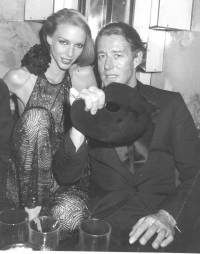
During the 1970s, Halston dominated the high fashion with his long, fabulous Studio 54 appropriate designs. This was disco-influenced fashion, with fabrics made of spandex and polyester paired with platform shoes. Outfits were detailed with sequins and beading. The photo above is of designer Halston himself and model Karen Bjornson wearing his design in 1970.

Eco-Friendly Fashion 2009
FIN, a Norwegian eco-friendly high fashion brand, was established in 2006 by Nikolai Herlofsen. They focus on providing luxury clothing and saving the world at the same time. They only use organic and Fairtrade certified cotton and organic alpaca in the production of their garments. There are no pesticides or harmful chemical during farming, and they guarantee the farmers are making minimum income. I believe the transition from traditional to eco-friendly fabrics will continually become popular. This brand is already popular with a few celebrities like Keira Knightly and Kate Bostworth.

Saturday, September 26, 2009

Six Functions of Dress

Ceremonialism
The Royal wedding in 1981 between Diana and Prince Charles was a date we will always remember, but so was her infamous dress. The gown that Princess Diana wore is an example of Ceremonial Function of dress, and was nothing short of amazing. Designed by David and Elizabeth Emanuel, this elegant dress featured a 25-foot train and was crafted with antique lace, ivory silk taffeta, and over ten thousand pearls and sequins. The gown was hand-woven and the lace was sewn with gold thread. Interestingly enough, some of the leftover parts of fabric that weren’t used are being sold in auctions and on the internet today.

Sexual Enhancement
Bustiers were introduced to enhance a women’s shape by slimming the waist while lifting the bosom. They became popular in the early 1900’s and are still fashionable today. One very well-known bustier was the cone-shaped bra designed by Paul Gaultier for Madonna. She wore this during her 1990 Blonde Ambition tour. This is an example of Sexual Enhancement.

Group Membership
When the favorite Upper East Side teenagers on the show of Gossip Girl aren’t sipping martinis at Butter or plotting manipulative schemes, their dutifully maintaining their top grades at the Constance Billard school and St. Judes School for boys. As you can see, they are all putting their distinctive personal style in the official school uniform, but the look is a keep example of Group Membership.


Gender Differentiation
The difference between the dress code between men and women in the Islamic community is a prime example of Gender Differentiation. Women must cover the entire body, only the hands and face may remain visible. The material must be thick so it is not see through, and must hang loose so that the silhouette is not apparent. The dress cannot have bold designs to attract attention and one can not wear clothing for the purpose of increasing one’s status in society. See http://www.islamfortoday.com/7conditions.htm for reference. The only guideline men have to follow is that they must not show their naval area and must cover their head. Some men take their dress code lightly and think the women’s code is more important and spend their lives lecturing various women about what to wear and what not to wear.

Decorative
This is a photograph of a woman in the Karo People region in South Ethiopia. The region is known to be masters of body painting, especially when a dance or celebration is coming up. Men, women, and children use white chalk, yellow mineral rock, black charcoal and to paint themselves. The men usually have wild hairstyles and ornaments. Head pieces, necklace beading, and animal skins are also used for decoration. One very unique feature is the long nail that is sticking through the woman’s bottom lip for ornamentation.

Environmental Protection
This photo, taken by Edward S. Curtis in 1929, is a great example of Environmental Protection clothing. Due to the Arctic climate, this particular Eskimo family kept warm from the freezing temperatures through their fur coats and hoods.

Monday, September 21, 2009

Leifsdottir's Spring 2010 Show


Leifsdottir’s Spring 2010 Mercedes Benz Fashion show was exotic and the show was “one with nature”. Many described it like “entering a fanciful garden party”. White bird cages with real birds were in the room, and the décor was filled with beautiful chairs and a white fountain. The clothing had an Indian influence with the use of navy blue, vibrant pinks and yellow, lime green, and white. It is a beautiful, whimsical collection that consists of everyday dresses, cocktail attire, blouses, skirts, and structured bottoms. The designs are flirty and fun, but sophisticated for the curves of the everyday woman. What I loved the most about the collection was the draping of all the different types of sleeves. This detail in each of the design really made the collection branch out from other designers. The accessories were elaborate and consisted of headpieces filled with leaves and dragonflies, gold rope necklaces, and beaded gold pumps.

Christian Siriano Spring 2010 Collection


I was very much impressed by Christian Siriano’s show at the Promenade during Mercedes Benz Fashion week. He is very talented and I have been following him since his debut on Project Runway. He is a young designer with youthful and innovative designs. His Spring 2010 Collection consisted of chic professional wear, party dresses, and exquisite formals. His collection had a lot of Mediterranean influence, and had a “resort” wear appeal. Christian himself noted that it was “a lush take on Mediterranean Travel”. There were lots of ruffles and pleats which provided structure and femininity to the designs. His choice of color palette consisted of khaki, white, coppers, vibrant reds and hues of blue. Fabrics were sheer and delicate, with the use of chiffon, organza and satin. His Collection really focused on the everyday woman, besides a few exceptions for the Red Carpet of course. I love his choice of bringing big hats and bangles as accessories back on the runway. What I thought was also interesting was all the models on the runway were wearing his shoes from his Spring 2010 Payless line, which included gladiator heels, pumps, and booties. Christian is one of the hottest new seasonal designers, and I know we will see more of him in the future!